
Lanna Culture
Traditions, festivals, and the Khon Mueang way of life
Daily Life and "Khon Mueang" Identity
Lanna culture is the lived experience of the Khon Mueang—the "People of the Mueang" (valley communities). It is a culture distinct from Central Thailand, characterized by a slower pace of life, a distinct dialect (Kam Mueang), and a high value placed on social harmony and "cool hearts" (jai yen).
Traditionally, Lanna society was stratified but communal. Village life revolved around the temple (Wat), which served as the community center, school, and news hub. Labor was often exchanged through ao raeng (mutual help) systems for rice harvesting or house building, reinforcing tight-knit community bonds that persist in rural areas today.
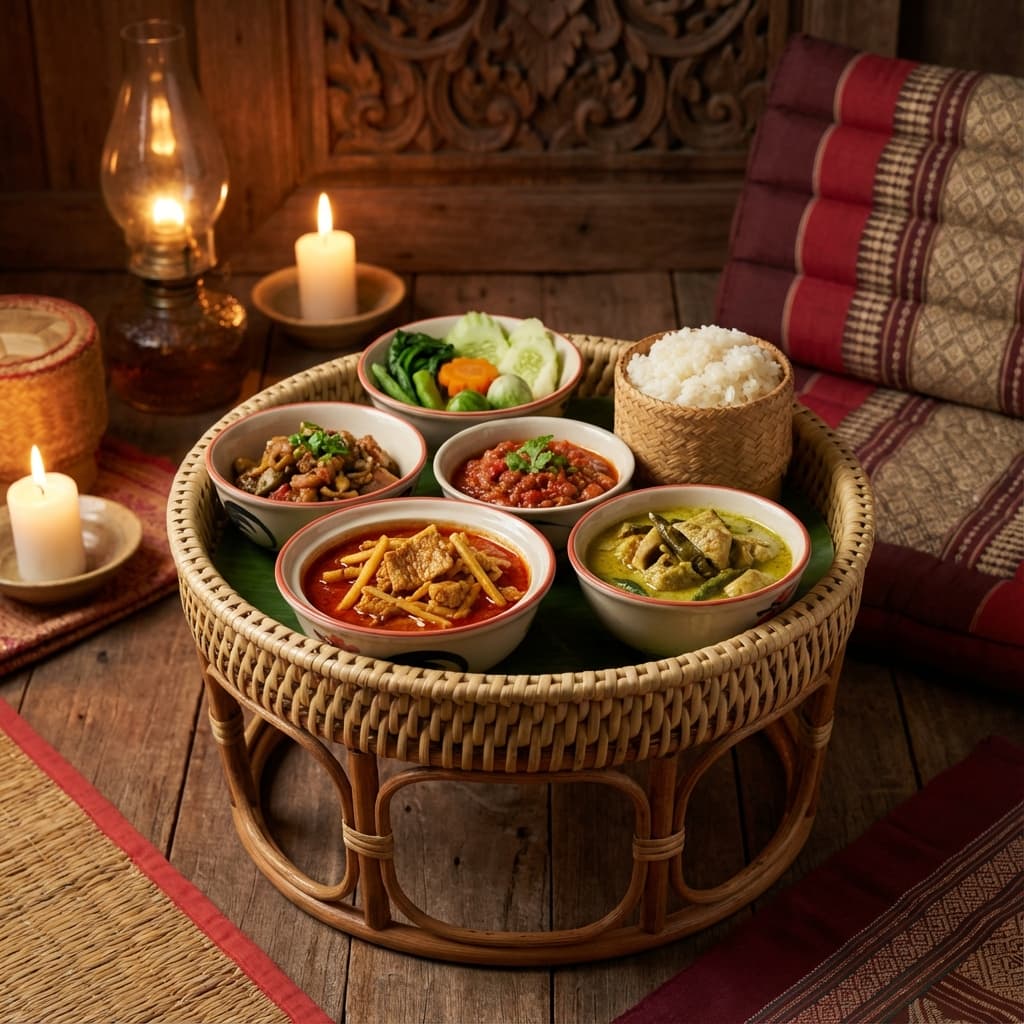
The Khantoke Tradition: Lanna Gastronomy
Food is a central pillar of Lanna identity, best exemplified by the Khantoke dinner. Historically, Lanna people ate seated on the floor around a toke, a low, round pedestal tray made of rattan or teak. This communal dining style emphasizes sharing and hierarchy, with the most senior members of the family taking the first bite.
A traditional meal includes:
- Sticky Rice (Khao Niew): The staple grain, eaten by hand. It serves as the utensil for scooping up dips and curries.
- Nam Prik Ong: A mild, tomato-based pork chili dip that reflects the historical trade routes bringing tomatoes from the Americas via European traders.
- Nam Prik Noom: A fiery roasted green chili dip, often eaten with steamed vegetables and pork crackling (Khaeb Moo).
- Gaeng Hang Lay: A rich, slow-cooked pork curry with ginger and tamarind. Its origins are traced back to Burmese influence during the Burmese period, specifically the Hinlay curry, adapted to the northern palate.
- Sai Oua: The famous northern herbal sausage, packed with lemongrass, kaffir lime leaves, and galangal.
Festivals: Yi Peng and Songkran
Northern festivals are visually spectacular and deeply spiritual, governed by the lunar calendar.
- Yi Peng (The Lantern Festival): Often confused with the national Loy Krathong, Yi Peng is specific to Lanna. Held on the full moon of the 2nd lunar month (usually November), it involves releasing thousands of khom loi (sky lanterns) made of rice paper. The act of releasing the lantern symbolizes letting go of bad luck and misfortunes from the previous year. It is also an act of paying homage to the Phra That Kaew Chulamanee, a mythical stupa in heaven containing the Buddha's hair. The sight of the night sky filled with lanterns is one of Chiang Mai's most iconic images.
- Songkran (Pi Mai Mueang): The Lanna New Year in mid-April is far more than the water fights seen in Bangkok. It involves complex, days-long rituals. The Wan Payawan (New Year's Day) sees locals engaging in dam hua, a ceremony of paying respect to elders by pouring scented water (infused with som poi pods and flowers) on their hands. Another unique custom is the carrying of sand to temples to build "Chedi Sai" (sand stupas), decorated with colorful flags (tung). This ritual symbolizes replacing the earth that worshippers may have inadvertently carried away on their shoes during the year, an act of merit-making and temple maintenance.
Spirit Worship and Buddhism: A Dual Faith
Lanna spirituality is a syncretic blend of Theravada Buddhism and Animism. Before Buddhism arrived, the Tai people worshipped spirits (Phi). This belief system remains active and parallel to Buddhist practice.
- Phi Pu Ya: Ancestral spirits that protect the family lineage. Shrines to these spirits are often found in the family compound, and they are consulted during major life events like marriage.
- Phi Suea Ban/Phi Suea Wat: Guardian spirits of the village and temple.
- Inthakhin: The City Pillar worship in Chiang Mai involves offering flowers to the city's guardian spirits to ensure rain and prosperity. This ritual, held annually at Wat Chedi Luang, predates Buddhism and is essential for the city's spiritual survival.
Temples often contain small spirit houses, and diverse rituals like the buffalo sacrifice (Pu Sae Ya Sae) were historically performed at the foot of Doi Suthep to propitiate powerful nature spirits, ensuring the fertility of the rice fields and the timely arrival of the monsoon.