
Temples, Buddhism, and Spirit
Sacred architecture and Buddhist heritage
Buddhism as Cultural Infrastructure
In the Lanna Kingdom, the temple (Wat) was more than a place of prayer; it was the infrastructure of civilization. Under kings like Tilokarat, temples functioned as libraries holding palm-leaf manuscripts, schools for novices, and administrative centers. The spread of Sinhalese Theravada Buddhism in the 14th century linked Lanna to the wider Buddhist world, influencing art, law, and kingship. The king derived legitimacy not just from bloodline, but from his role as Dhammaraja (Righteous Ruler) and supporter of the Sangha (monkhood).
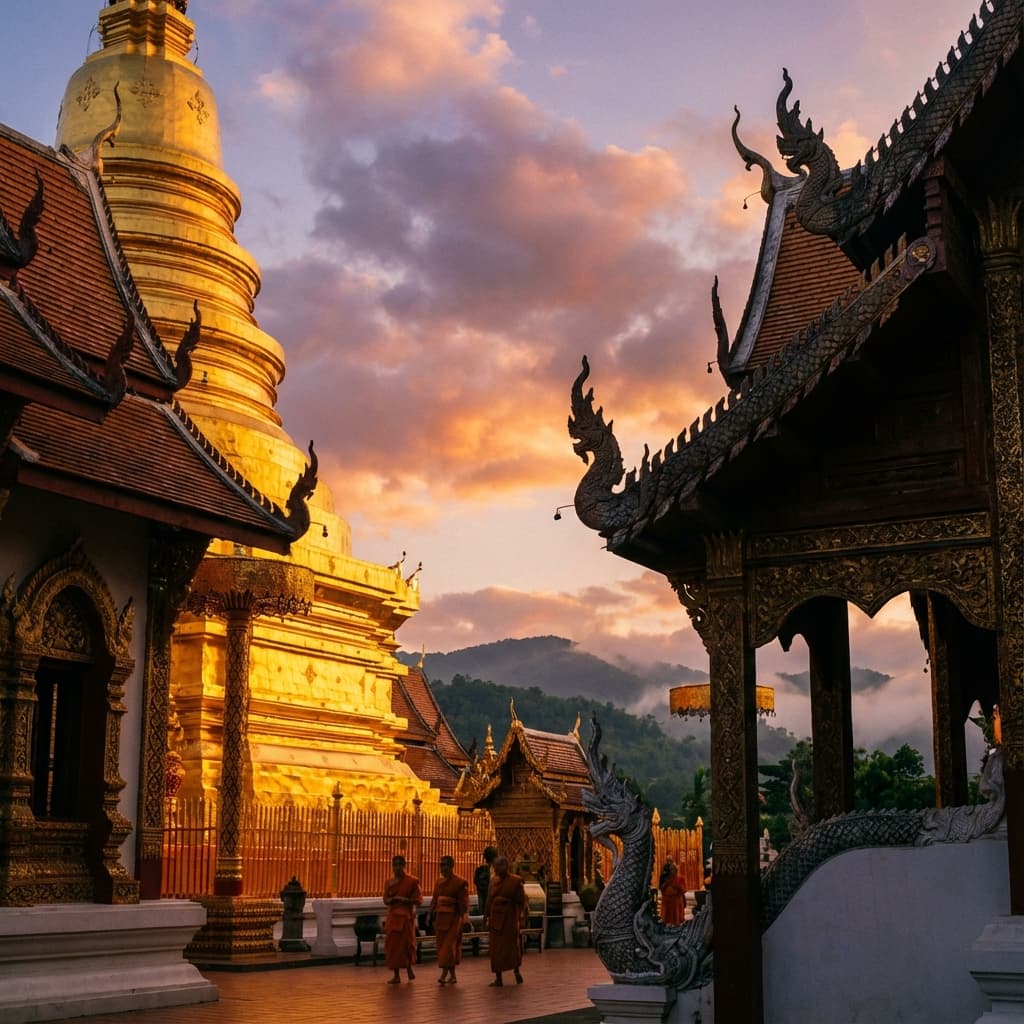
Lanna Temple Architecture: How to Identify It
Lanna temples are visually distinct from the glittering, high-peaked temples of Bangkok (Rattanakosin style). Key characteristics include:
- Low, Sweeping Roofs: Lanna viharns (assembly halls) feature multi-tiered roofs that sweep low towards the ground, mimicking the wings of a bird protecting the congregation. This architectural choice creates a dark, cool interior conducive to meditation and protects the wooden structure from heavy northern rains.
- The Kalae: A V-shaped wooden carving at the peak of the gable, resembling buffalo horns or stylized birds. This is the hallmark of the Northern domestic and religious architecture. Theories on its origin range from symbolizing buffalo horns (wealth in agrarian society) to abstract representations of peacocks (a symbol of the sun).
- Open-Sided Halls: Many older Lanna temples (like Wat Phra That Lampang Luang) are open-sided wooden pavilions (Viharn Nam Tam), allowing air circulation and connecting the sacred space with the surrounding nature. This contrasts with the enclosed, thick-walled halls of the later Rattanakosin period.
- Integration of Wood: Due to the abundance of teak in the northern forests, Lanna temples feature exquisite wood carvings on gables, doors, and pillars, often depicting foliage, Naga serpents, and mythical creatures.
Sacred Landscapes: The Suthep-Ping Axis
Chiang Mai's location was chosen based on cosmological principles. The city sits between the Ping River (the source of life and trade) and Doi Suthep (the sacred mountain and home of guardian spirits).
- Wat Phra That Doi Suthep: Perched on the mountain overlooking the city, this temple is the spiritual anchor of Chiang Mai. Founded in 1383 to house a Buddha relic brought by a white elephant, it symbolizes the connection between the city and the celestial realm. The climb up the Naga staircase is a symbolic journey from the earth to Nirvana.
- Wat Chedi Luang: Located in the physical center of the old city, this massive stupa (once over 80 meters tall before the earthquake of 1545) housed the Emerald Buddha and the City Pillar (Inthakhin). It represents the Axis Mundi, the center of the universe around which the kingdom revolved.
Temple Etiquette and Responsible Tourism
Visiting Lanna temples requires respect for living traditions.
- Dress: Shoulders and knees must be covered. This is not just modesty; it is a sign of respect for the sacred space.
- Feet: Remove shoes before entering buildings; never point your feet at a Buddha image or a monk, as feet are considered the lowest and "dirtiest" part of the body.
- Head: The head is considered the highest and most spiritual part of the body; do not touch monks or statues disrespectfully.
- Gender: In some specific Lanna sites, such as the Silver Ubosot at Wat Sri Suphan or the base of certain chedis (like Wat Chedi Luang), women are prohibited from entering due to ancient beliefs regarding sacred relics (takrud and amulets buried beneath) and spiritual purity. Look for signage and respect these local customs, even if they differ from modern norms.