
Lanna Arts and Crafts
Silverwork, textiles, and traditional craftsmanship
The Roots of "Lanna Style"
Lanna art is a reflection of the kingdom's multicultural history. As a crossroads of trade between China, Burma, and Siam, Lanna artisans absorbed techniques from various groups. "Lanna Style" today is a blend of indigenous Tai Yuan aesthetics with influences from the Mon, Shan (Tai Yai), and Tai Lue peoples. Craftsmanship was often organized by village, a legacy of the kakulam system where war captives with specific skills (silversmiths, weavers) were resettled together to produce goods for the court.
Silverware and the Wualai Community
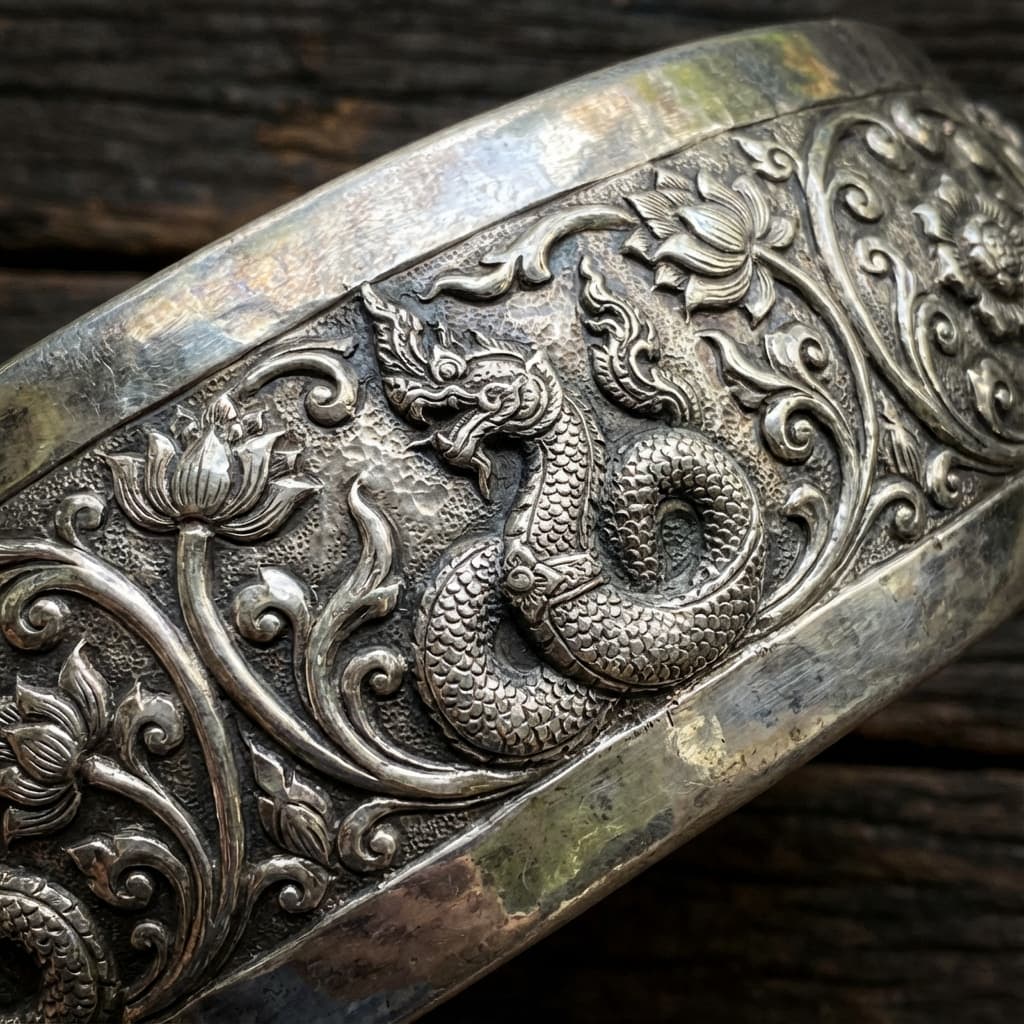
The Wualai district in Chiang Mai was settled by silversmiths from the Salween River basin (Shan State) during the city's resettlement in the early 19th century.
- Technique: Lanna silver is famous for repoussé work, where intricate high-relief patterns are hammered from the backside of the metal. Common motifs include the zodiac animals, Jataka tales (lives of the Buddha), and intricate floral vines.
- Wat Sri Suphan: The world's first "Silver Temple" is the masterpiece of this community. The entire ordination hall is covered in silver, aluminum, and nickel panels, showcasing the zenith of local metalwork skills. It serves as both a religious site and a living museum of the craft.
Lacquerware (Krueang Khoen)
Lacquerware was introduced by Tai Khoen captives from Keng Tung (modern Myanmar). The craft involves coating bamboo or wooden frames with black resin (lacquer) from the Rak tree (Gluta usitata).
- Design: Traditional Lanna lacquerware uses a technique called Lai Rot Nam (gold leaf on black lacquer) or incised designs filled with red cinnabar pigment.
- Utility: It was used for everything from betel nut boxes to alms bowls and ceremonial trays. Lacquerware was essential in Lanna society because it was lightweight, waterproof, and insect-resistant, making it ideal for the tropical climate.
Textiles: The Story in the Weave
Textiles are a primary marker of Lanna ethnic identity. The distinct patterns woven into a skirt (Sinh) can tell you exactly which village or ethnic group a woman belongs to.
- Teen Jok: This is a decorative hem added to the bottom of a tube skirt. The most famous style is from Mae Chaem. These textiles are woven using porcupine quills to lift threads, creating complex geometric patterns filled with bright yellows and reds. The patterns often symbolize water, naga serpents, or lanterns, serving as a talisman for the wearer.
- Tai Lue Textiles: Known for their tapestry weaving techniques (Nam Lai or flowing water patterns), often seen in Nan and Phayao. These designs mimic the flow of rivers, reflecting the migration of the Tai Lue people from the river valleys of Yunnan.
Bo Sang Umbrellas and Baan Tawai Wood Carving
- Bo Sang Umbrellas: Legend says a monk named Phra Intha brought the umbrella-making technique from Burma. Locals use Sa paper (mulberry bark) and bamboo frames to create colorful, hand-painted parasols. Originally used by monks, they have become a symbol of Chiang Mai and a canvas for artistic expression.
- Baan Tawai: This village is the heart of woodcarving. Artisans here transformed from making farm tools to crafting intricate architectural elements, furniture, and sculptures. Baan Tawai is now a major export hub, known for its "antique" reproductions and contemporary wood art.