
People, Language, and Identity
The diverse communities of Northern Thailand
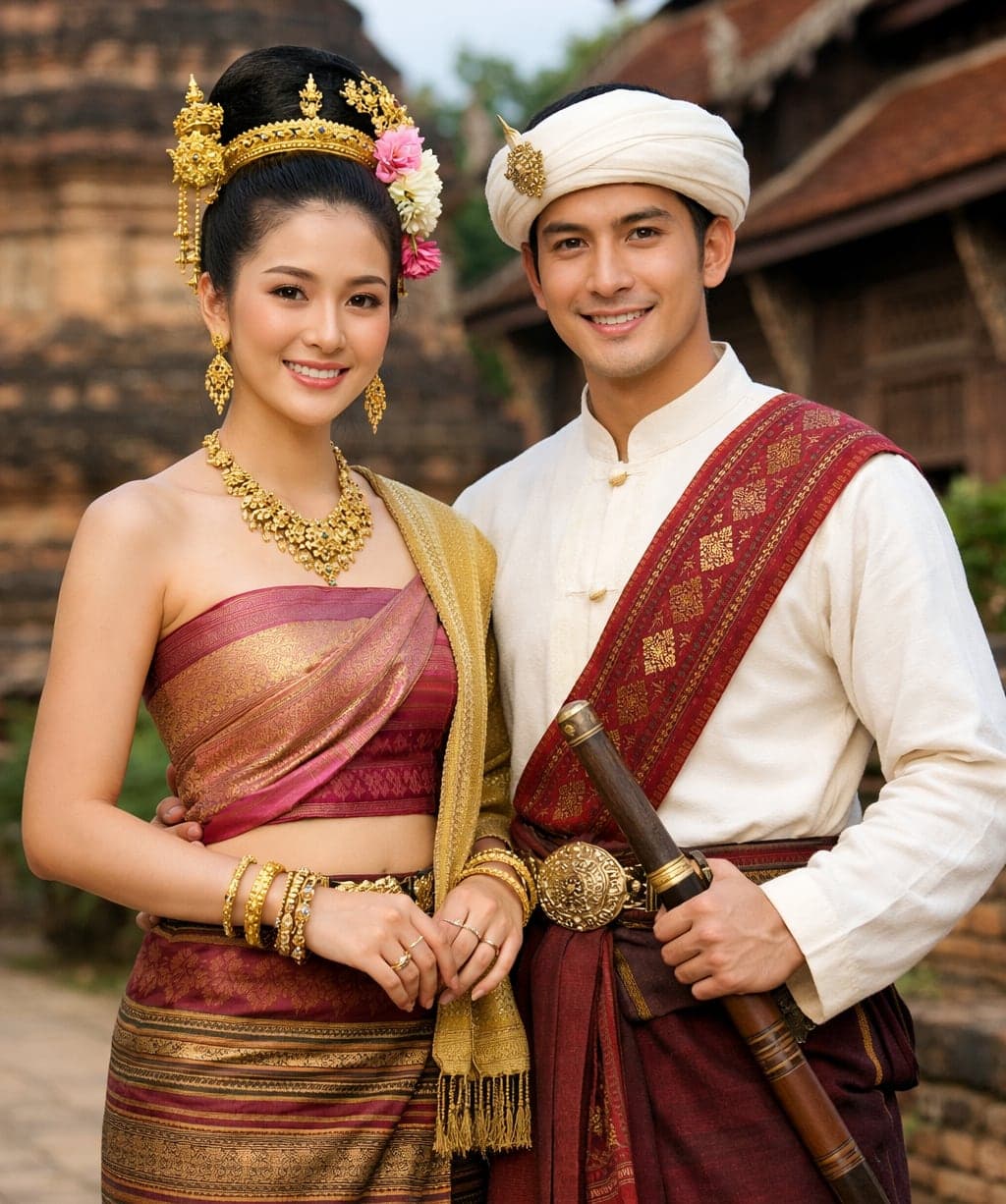
Khon Muang (Kon Muang)
Khon Muang (also written Khon Mueang, คนเมือง) refers to the Northern Thai people of the former Lan Na (Lanna) kingdom area. It represents a living cultural identity shaped by shared history, language, and community traditions, rather than "modern city life" in the contemporary sense.
In the Tai cultural context, a muang is a settled, organized community, traditionally centred on irrigated rice farming in river valleys and plains, with temples, local governance, and interdependent village life. So Khon Muang broadly means "people of our muang," or "people of the cultivated land and community," and historically distinguished lowland, paddy-based communities from surrounding upland groups with different livelihoods.
Key Points
- Who they are: The Khon Muang are the indigenous Northern Thai, closely associated with Lanna heritage and the historical Lan Na realm.
- Identity is cultural, not only ethnic: "Khon Muang" has been used as a marker of shared community life, customs, and language, not simply a genetic label.
- Language: Many Khon Muang speak Northern Thai, also called Kam Mueang (กำเมือง) alongside Central Thai.
- Traditional writing: Older religious and cultural texts were often written in Tai Tham (Tua Mueang) script, which remains especially associated with temples and manuscript traditions.
- Settlement pattern: Historically rooted in river valleys and alluvial plains, with wet rice agriculture (paddy fields) forming the backbone of local economy and seasonal rhythms.
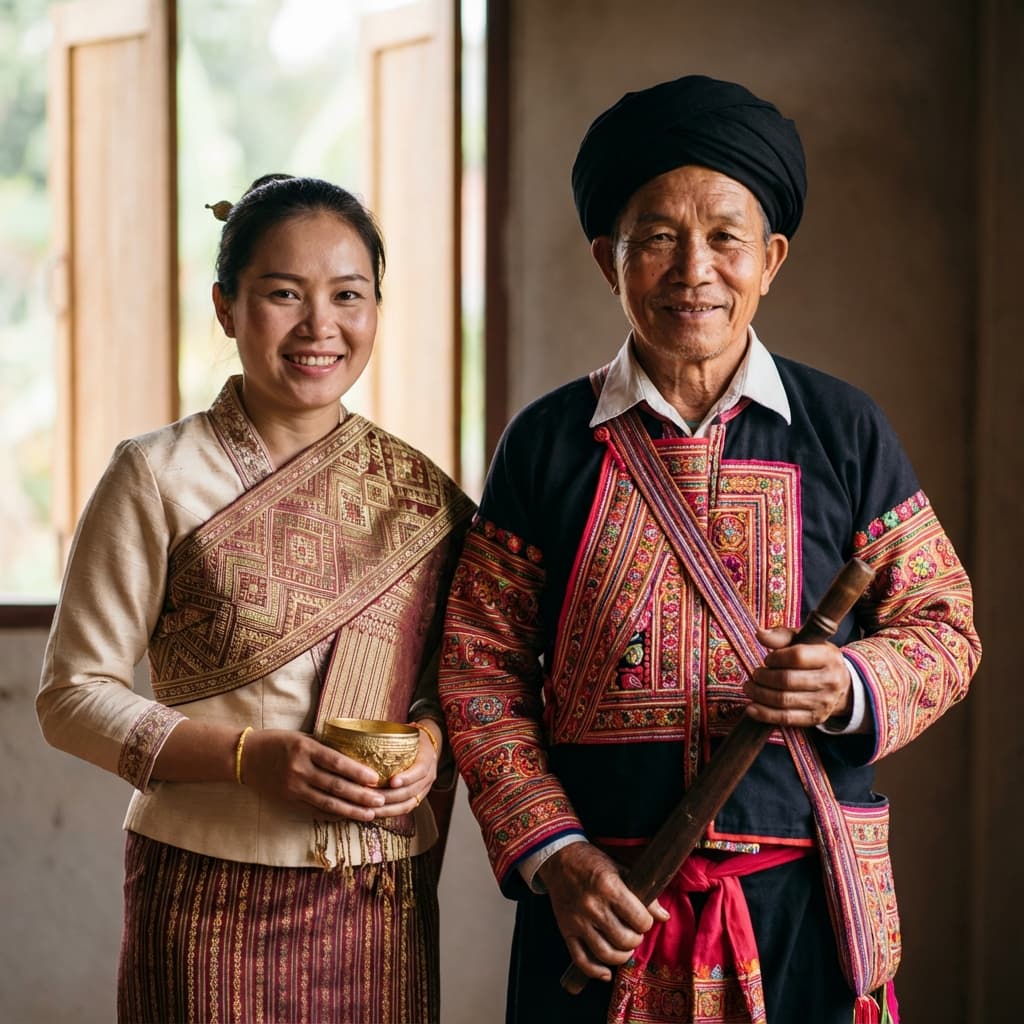
- Dress and textiles: Common heritage clothing includes men’s indigo-dyed mor hom garments and women’s sinh (sarongs) with distinctive woven bands and hem patterns (styles vary by locality).
- Belief system: Predominantly Theravada Buddhist, commonly blended with local spirit beliefs and protective rites that focus on wellbeing, fortune, and social harmony.
- Ritual life: Community ceremonies often include spirit and blessing rituals (for morale, prosperity, or life transitions), frequently conducted alongside temple-based merit making.
- Arts and heritage: Lanna identity is also expressed through temple culture, festivals, music, dance, woodwork, and textile traditions, with strong local variation across provinces.
- Today: "Khon Muang" is still widely used as a regional identity in Northern Thailand, including urban areas, and there is ongoing interest in revitalizing language and traditional arts.
Kam Mueang: The Language of Lanna
The Northern Thai language, Kam Mueang, is the soul of the culture. While closely related to Central Thai and Lao, it has its own script (Lanna script/Tai Tham), which was historically used for religious texts and is distinctively rounded compared to the angular Thai script.
- Spoken Dialect: Visitors will notice the soft, melodic tones of Kam Mueang. The polite particles Jao (for women) and Krub (for men) replace the central Thai Ka/Krub. The word Jao is iconic to the north, used by women as "Yes," "Hello," and "Thank you," softening every interaction.
- Survival: Today, most northerners are bilingual, speaking Central Thai in schools/government and Kam Mueang at home. There is a concerted effort to preserve the written Lanna script, which is now taught in some temples and universities to ensure the ability to read ancient palm-leaf manuscripts is not lost.
Hill Tribes and Ethnic Diversity
Lanna has always been a multi-ethnic society. The mountains surrounding the valleys are home to various "Hill Tribes" (highlanders), including the Karen (Pakaryor), Hmong, Lisu, Lahu, Akha, and Yao.
- Relationship: Historically, these groups traded forest products with the Khon Mueang in the valleys but remained culturally distinct. Today, they are integral to the region's cultural tapestry.
- Integration: While maintaining their own languages and dress, many highlanders have integrated into the modern economy. A major success story is the transition from opium cultivation (in the mid-20th century) to high-value crops like Arabica coffee, tea, and temperate fruits, largely driven by the Royal Projects initiated by King Bhumibol Adulyadej.
Cultural Sensitivity
When interacting with local communities:
- Respect Hierarchy: The Wai (greeting) is essential. Younger people should always wai elders first.
- Photography: Always ask permission before photographing hill tribe members; they are people, not exhibits. Treat villages as living communities, not human zoos.
- Support: Buy authentic handicrafts directly from villages or fair-trade cooperatives to support economic self-reliance.